- Home
- Community
- Maps & Other Resources
- New Garden Resident Guide
New Garden Resident Guide
 A Brief History
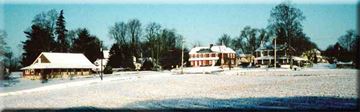
Before William Penn, Jr. obtained his patent for land given to him by his father in 1706, he arranged its sale. This land included the area known as New Garden Township, an area of steep slopes and rolling hills cut by fast-moving creeks and meandering streams. Homes were built, land was cleared and cultivated and Meeting Houses and schools were constructed. Soon villages sprouted - New Garden which grew around the Meeting House; Toughkenamon on the "road from Brandywine to Nottingham" and where the old inn, best known as The Hammer and Trowel was located; Landenberg which was the home of many mills located along the White Clay Creek (most notably cotton mills and woolen mills); and Kaolin which was the center of extensive clay quarries from which a fine china clay was excavated. As years passed and water power gave way to other sources of energy, the mills closed and many employees moved on to more prosperous industrial areas. The clay quarries filled with water, and the Township returned primarily to farming, and so it remained for many years. The countryside is changing, but all around us, we can still see the lovely homes, schoolhouses, Meeting Houses, and Churches that date from the 1700s and 1800s.
 New Garden Township & Agriculture
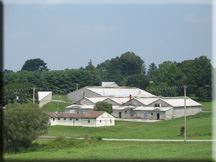
New Residents are reminded that part of the charm of the Township is its agriculture. There are many corn and hay fields across the landscape and provide a unique break from the typical urban and suburban scenery. Along with the beautiful landscape, there are inconveniences like farm equipment on the roads that slow down traffic. As with any agricultural facility, there are odors associated with natural natural products. Most farmers make every effort to minimize these odors but they are unavoidable and you should consider them as a part of why the landscape is as it is.